Choosing the Right Generator Size for Your Needs
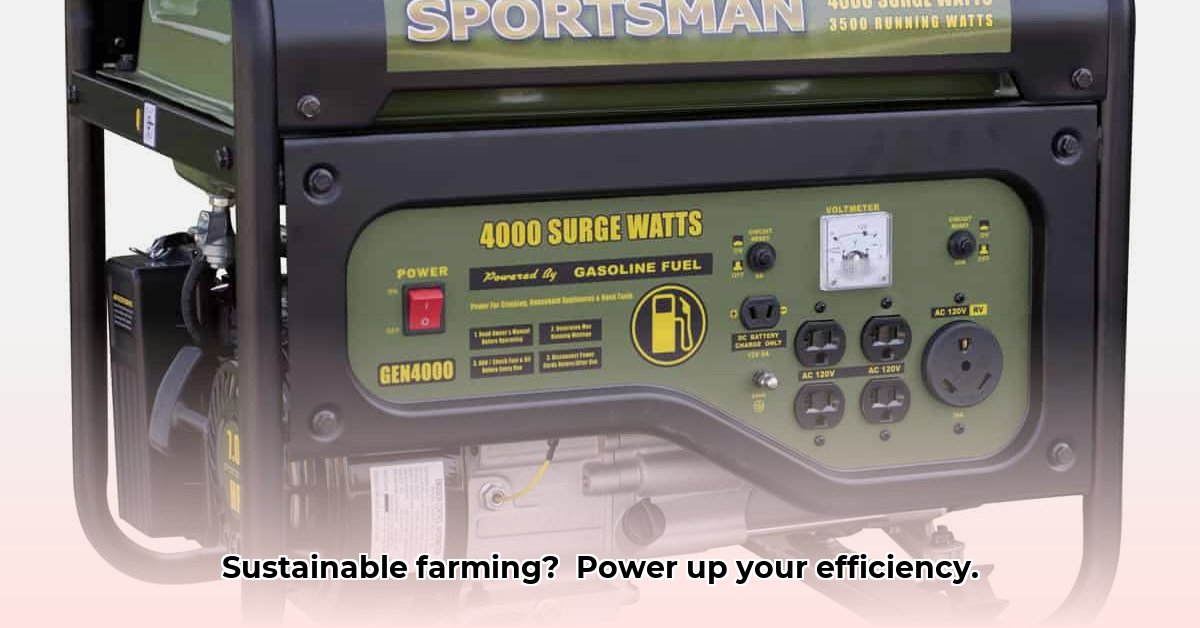
Selecting the appropriate portable generator hinges on accurately assessing your farm's power demands. Begin by listing all equipment needing power (milk coolers, irrigation pumps, electric fencing, etc.), noting each appliance's wattage-- the unit of power measurement. Sum the wattage of all simultaneously-running devices; add at least a 20% safety margin to account for surges and unexpected needs. Tractor Supply offers a wide range of generators with varying wattage outputs. Consult their specifications carefully, or seek guidance from a knowledgeable Tractor Supply associate. Selecting the right generator ensures optimal performance and avoids overloading.
Don't forget to factor in future expansion. Will you be adding new equipment in the near future? Consider this potential growth when sizing your generator. For more information on solar generator options, check out Tractor Supply's solar generators.
Fuel Considerations for Sustainable Agriculture
Fuel choice significantly impacts your environmental footprint and operational costs. Gasoline generators offer affordability but may have higher emissions. Propane generators are cleaner-burning and produce fewer emissions, making them an excellent choice for environmentally conscious farmers. Diesel generators provide longer runtimes but are typically more expensive. Tractor Supply frequently stocks generators offering fuel flexibility, allowing you to choose the most cost-effective and environmentally responsible option depending on your circumstances and budget. Consider the long-term costs of fuel versus the upfront purchase price.
What fuel type best aligns with both your budget and your commitment to sustainable practices?
Safe Operation and Maintenance Practices
Prioritize safety above all else; always meticulously read the owner's manual before starting any generator. Never operate a generator indoors; carbon monoxide poisoning is a lethal risk. Ensure adequate ventilation around the generator. Regular maintenance is vital for safe and efficient operation and extends the generator's lifespan. This includes timely oil changes, air filter replacements, and keeping the generator clean and dry. Think of it as preventative maintenance for your farming equipment; it prevents costly breakdowns.
What are the most critical safety precautions when operating a portable generator?
Quiet Generators: Minimizing Noise Pollution
Excessive noise negatively affects both your well-being and your neighbors'. Look for generators with lower decibel (dB) ratings; the lower the dB, the quieter the operation. Positioning the generator away from living areas and sensitive locations will further reduce noise. Investing in a sound enclosure can significantly dampen noise levels. Reduce noise pollution to foster positive community relations.
How can you minimize noise pollution from your portable generator?
Environmental Impact and Responsible Generator Use
Responsible generator use extends beyond fuel efficiency. It involves considering the entire product lifecycle. Opt for energy-efficient models when possible. Dispose of used oil and fuel responsibly, adhering to local regulations. Regular maintenance lowers emissions, minimizing your farm's environmental impact. Remember that sustainable farming involves conscious decisions across all aspects, including power generation.
What steps can farmers take to minimize the environmental impact of portable generator use?
Tractor Supply's Portable Generator Options: A Comparison
Tractor Supply provides a range of portable generators; choosing the right one depends on your specific power needs and budget. The information below provides general cost and performance metrics. Always verify current availability and specifications with Tractor Supply directly.
| Model | Wattage | Fuel Type | Approximate Runtime | Typical Noise Level (dB) | Price Range (Approximate) |
|---|---|---|---|---|---|
| Champion 3400 | 3400 Watts | Gasoline | 8-10 Hours | 68-72 | $500 - $700 |
| Generac GP3500 | 3500 Watts | Gasoline | 7-9 Hours | 65-70 | $600 - $800 |
| DuroMax XP4400EH | 4400 Watts | Gasoline | 8-10 Hours | 70-75 | $700 - $900 |
| Westinghouse WGen7500 | 7500 Watts | Gasoline | 10-12 Hours | 72-78 | $900 - $1200 |
(Note: These are example models and specifications. Always check with Tractor Supply for current availability and actual specifications.)
Troubleshooting Common Generator Issues
Like any equipment, generators may encounter issues. Here are solutions for common problems:
- Generator won't start: Verify fuel levels, spark plug connection, and secure all electrical connections.
- Low power output: Ensure adequate ventilation and proper fuel type and quality.
- Engine overheating: Check oil levels and ensure sufficient airflow around the generator.
- Unusual noises: Consult a qualified mechanic or Tractor Supply's customer support.
Case Studies: Successful Implementations on Farms
(Further research required to populate this section with real-world examples of successful portable generator use in sustainable farming. This section will be updated with verifiable case studies)
By carefully planning and responsibly employing portable generators from Tractor Supply, sustainable farmers enhance operational efficiency, minimize environmental impact, and safeguard their investments. This guide provides a framework for incorporating this critical technology into your sustainable farming strategy.